You wake up and your big toe is red, swollen, and extremely painful. Even the weight of a bedsheet feels unbearable. Or maybe you’ve noticed a bump forming on the side of your toe that’s becoming more irritated over time.
So what’s going on?
Is it gout?
Is it a bunion?
Or something else entirely?
A painful red toe joint can have more than one cause, and confusing the two can delay proper treatment. Understanding the difference between gout vs bunion pain is the first step toward relief.
Let’s break it down in clear, simple terms.

What Is Gout? And Why the Big Toe Is So Vulnerable?
The big toe joint carries a significant portion of your body weight with every step. It’s responsible for push-off during walking and helps maintain balance. Because of that constant pressure, it’s one of the most common areas for inflammation and joint problems.
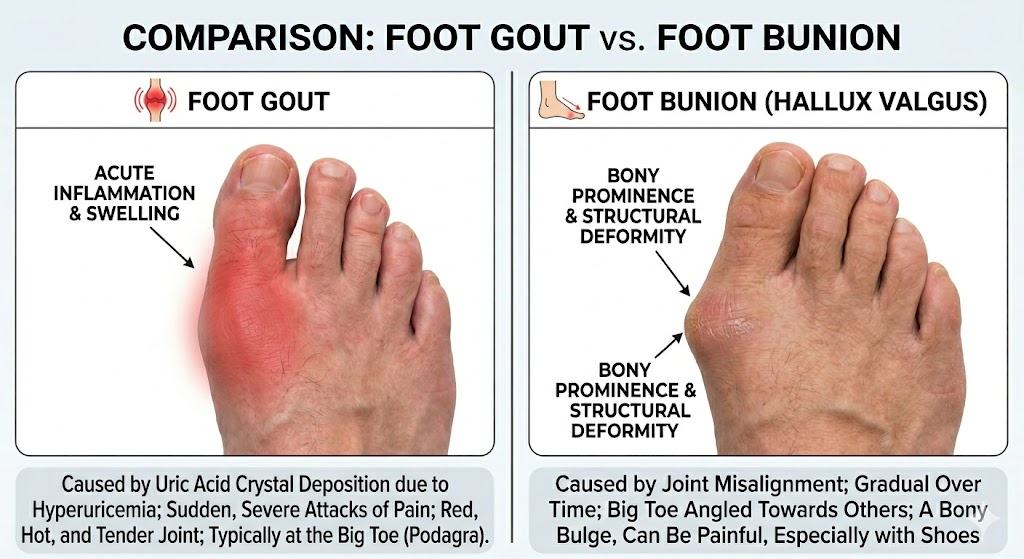
Two of the most common reasons for redness and swelling in this joint are gout and bunions. While both affect the same area, they are very different conditions. Gout is a form of inflammatory arthritis caused by a buildup of uric acid in the bloodstream. When uric acid levels rise too high, sharp crystals can form inside joints, especially in the big toe. This leads to intense inflammation.
Classic Gout Symptoms Big Toe
Common gout symptoms big toe patients describe include:
- Sudden, severe pain often starting at night
- Rapid swelling within hours
- Redness and warmth over the joint
- Extreme tenderness, even to light touch
- Difficulty walking due to pain
- Shiny or stretched-looking skin
Many patients describe gout pain as one of the worst pains they’ve ever experienced. It often appears suddenly and may resolve within a few days to a week, only to return later.
What Causes Gout?
Gout develops when uric acid levels become elevated. This condition is sometimes referred to as uric acid foot pain because the pain results directly from crystal buildup.
Risk factors include:
- Diet high in red meat or seafood
- Alcohol consumption
- Dehydration
- Kidney issues
- Family history
- Obesity
- Certain medications
Not everyone with high uric acid develops gout, but when crystals settle into the big toe joint, inflammation can be intense.

What Is a Bunion?
A bunion is a structural deformity of the big toe joint. It occurs when the big toe gradually shifts inward toward the smaller toes, causing a bony bump to form on the side of the foot.
Unlike gout, bunions develop slowly over time.
Signs of a Bunion
Symptoms of a bunion include:
- A visible bump on the side of the big toe
- Gradual joint swelling
- Redness from shoe friction
- Pain that worsens with tight shoes
- Restricted movement in the toe
- Thickened skin or calluses
The key difference is that bunion pain usually develops gradually and is often aggravated by footwear.

Gout vs Bunion: How to Tell the Difference
Although both conditions cause redness and swelling, there are important differences.
Onset of Pain
- Gout: Sudden and severe, often overnight
- Bunion: Gradual, worsening over months or years
Pain Intensity
- Gout: Sharp, intense, sometimes unbearable
- Bunion: Aching or pressure-related pain
Visible Changes
- Gout: Swelling without structural deformity
- Bunion: Noticeable bony bump
Recurrence
- Gout: Flare-ups that come and go
- Bunion: Persistent structural change
Still, in some cases, it’s not obvious. That’s where professional evaluation becomes essential.
The Role of Arthritis of the Foot
Both gout and bunions can involve arthritis of the foot.
Gout itself is a type of inflammatory arthritis. Bunions, especially advanced ones, can lead to degenerative joint damage over time.
If the joint becomes stiff, painful, and limited in movement, it may indicate underlying arthritis. This is why imaging plays an important role in diagnosis.

Why Imaging Matters
A visual exam alone may not be enough to determine whether you’re dealing with gout, a bunion, or another type of joint problem.
On-site imaging allows providers to:
- Identify bone deformities
- Detect joint space narrowing
- Spot crystal-related damage
- Rule out fractures
- Confirm arthritis of the foot
At Florida Foot and Ankle, on-site imaging helps deliver fast, accurate answers without unnecessary delays.
Getting a clear diagnosis early prevents improper treatment and speeds up recovery
Treatment Options for Gout
If testing confirms gout, treatment typically focuses on:
- Reducing inflammation during flare-ups
- Lowering uric acid levels
- Adjusting diet and hydration
- Prescribing medication when necessary
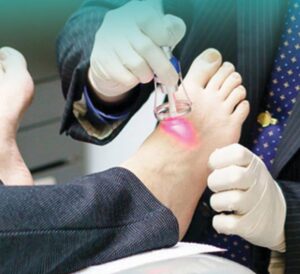
- The Remy Class IV Laser Therapy. The class IV laser treatment can help with gout symptoms by reducing pain and inflammation of the affected joint.
Managing uric acid foot pain often requires both immediate symptom relief and long-term prevention strategies.. Ignoring repeated gout attacks can lead to joint damage and chronic arthritis.
Treatment Options for Bunions
For bunions, treatment depends on severity.
Non-surgical options include:
- Wearing wider shoes
- Using padding or orthotics
- Anti-inflammatory medications
- Activity modification
- The Remy Class IV Laser Therapy. The class IV laser treatment can also help with bunion pain by reducing inflammation of the affected soft tissue.
If the deformity progresses or becomes severely painful, surgical correction may be considered. Because bunions involve structural alignment, addressing them early often prevents worsening joint damage.
When to Seek Professional Evaluation
You should schedule an evaluation if you notice:
- A painful red toe joint that appears suddenly
- Recurrent swelling episodes
- A growing bump on the side of your toe
- Limited toe movement
- Pain that interferes with walking
Early diagnosis helps determine whether the issue is gout vs bunion or another form of arthritis of the foot.
Why Self-Diagnosis Can Be Risky
Online searches are helpful, but misidentifying the cause of your pain can delay proper care.
For example:
- Treating a bunion like gout won’t reduce structural deformity.
- Ignoring gout can allow uric acid damage to worsen.
- Overlooking arthritis can lead to chronic stiffness.
The sooner you understand the cause, the sooner you can start the right treatment.

Protecting Your Joint Health
If you’re prone to gout, lifestyle changes matter. Staying hydrated and monitoring diet can help prevent flare-ups.
If you’re developing a bunion, wearing supportive footwear early can slow progression.
Regular foot evaluations are especially important if you have a history of arthritis of the foot or recurrent joint inflammation.
Get Clear Answers for Your Big Toe Pain
A swollen, painful big toe is never something to ignore. Whether it’s classic gout symptoms big toe patients describe or the gradual development of a bunion, accurate diagnosis makes all the difference.
If you’re experiencing uric acid foot pain, recurring inflammation, or a persistent painful red toe joint, professional evaluation with imaging provides clarity.
Understanding the difference between gout vs bunion isn’t just about comfort — it’s about protecting the long-term health of your joint.
If your big toe is red, swollen, and painful, don’t wait for it to “just go away.” Get answers, get imaging, and start the right treatment plan today.